Overview
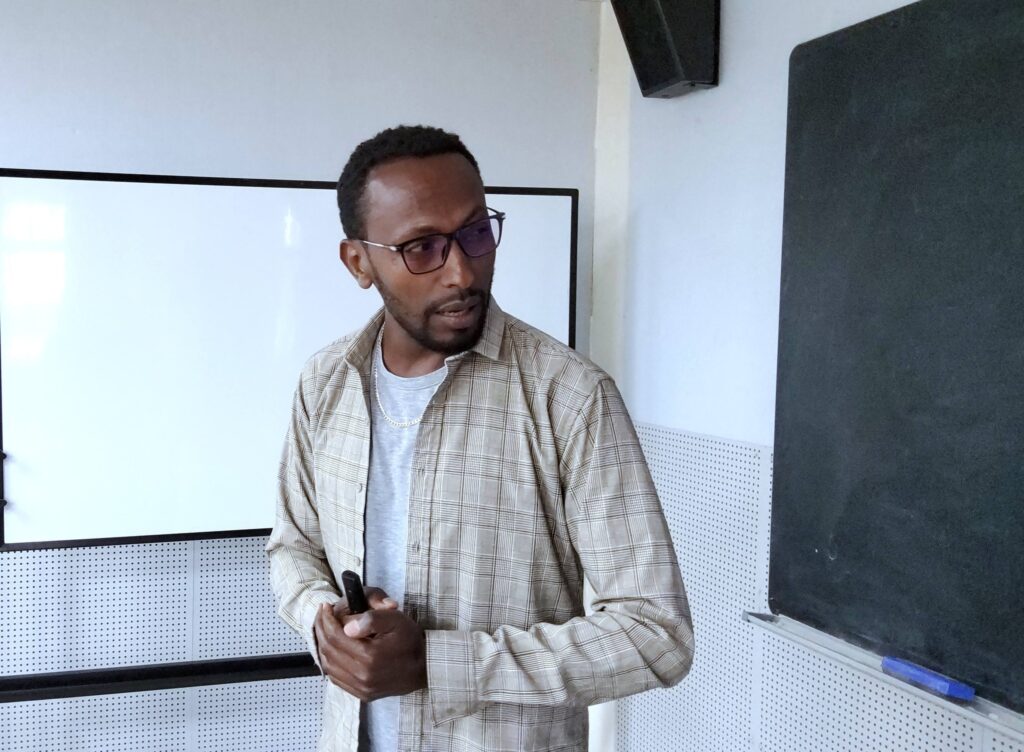
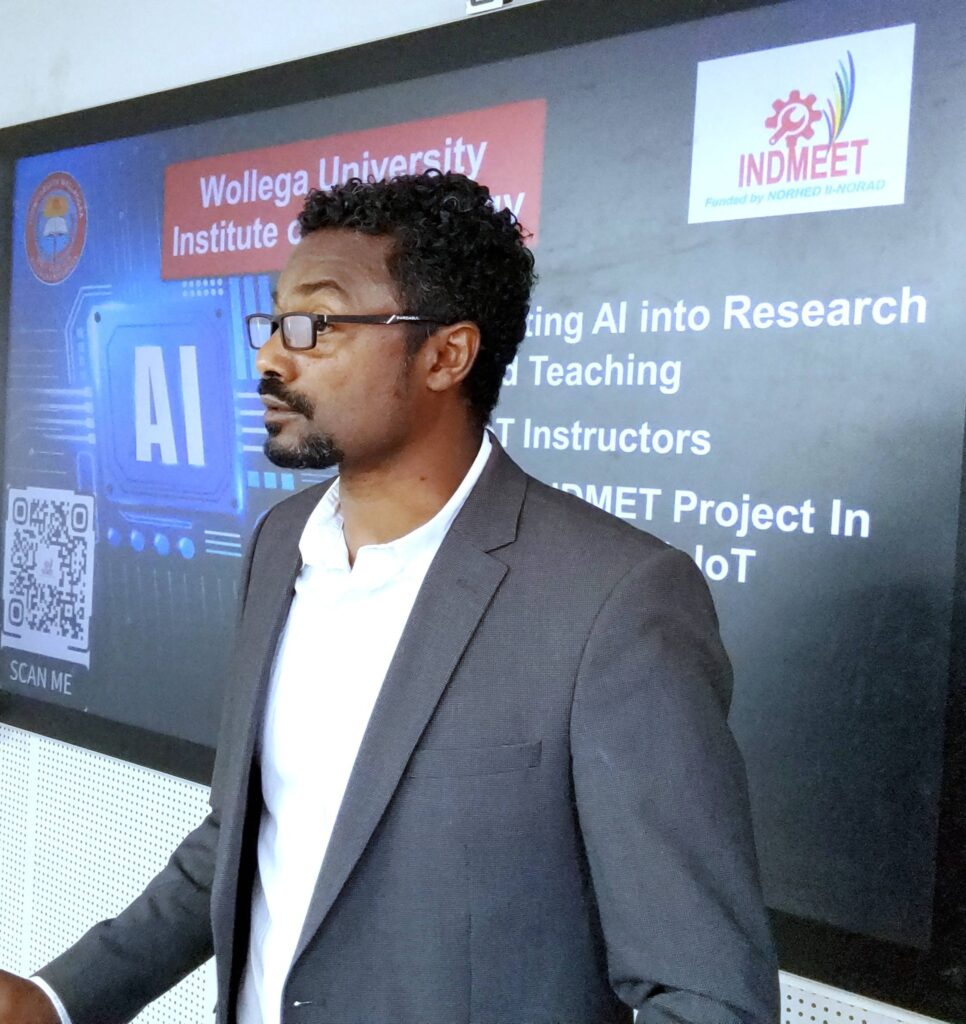
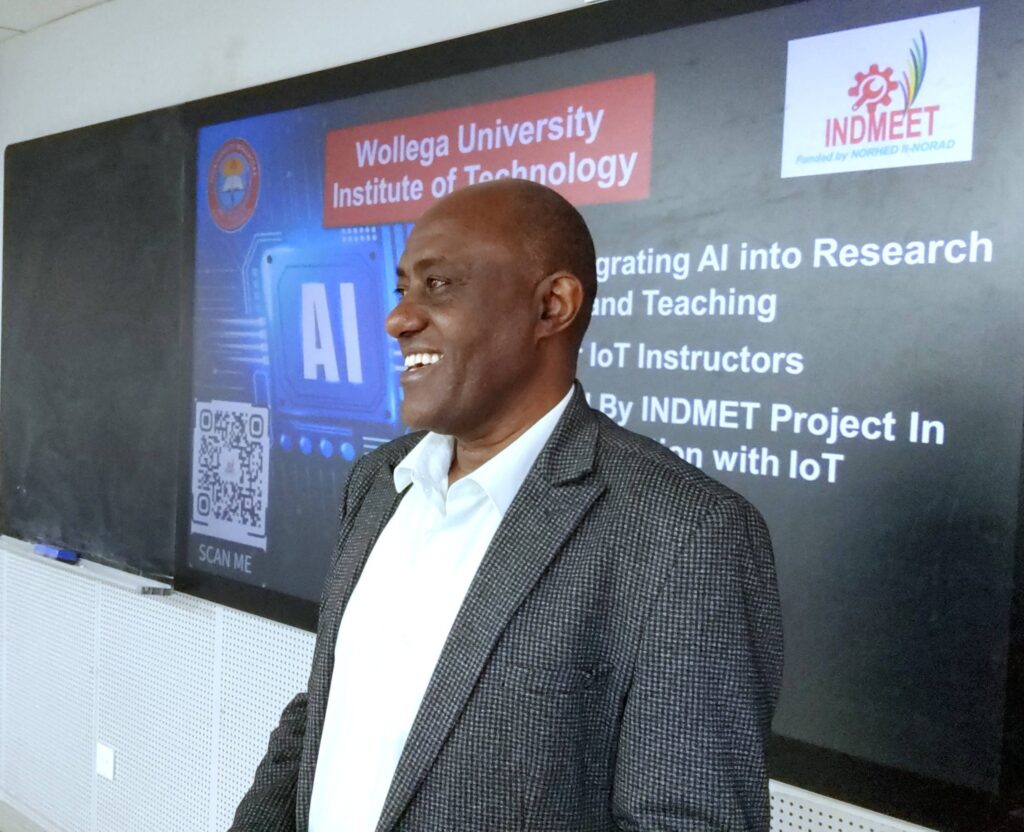
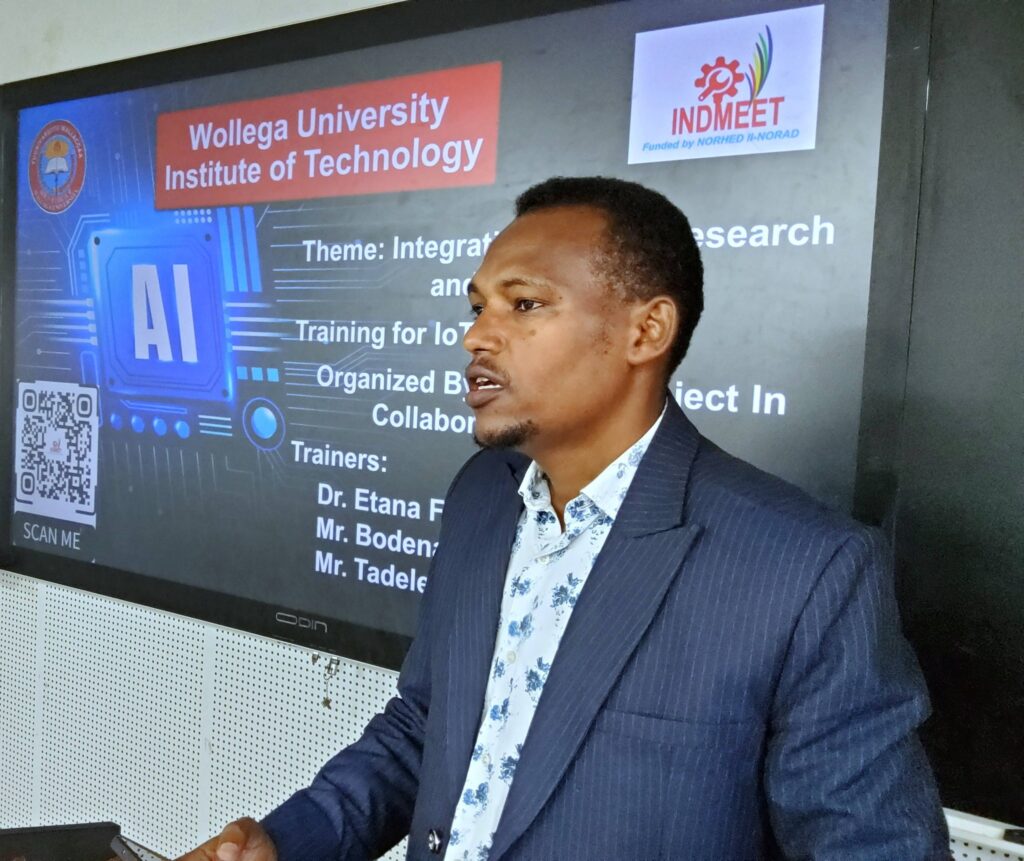
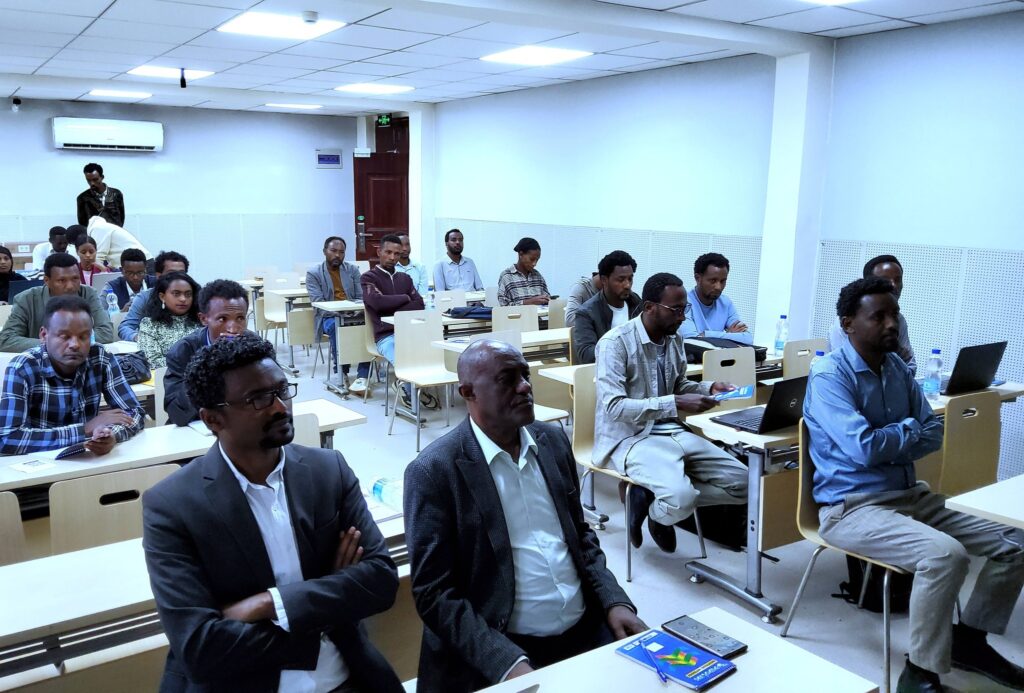
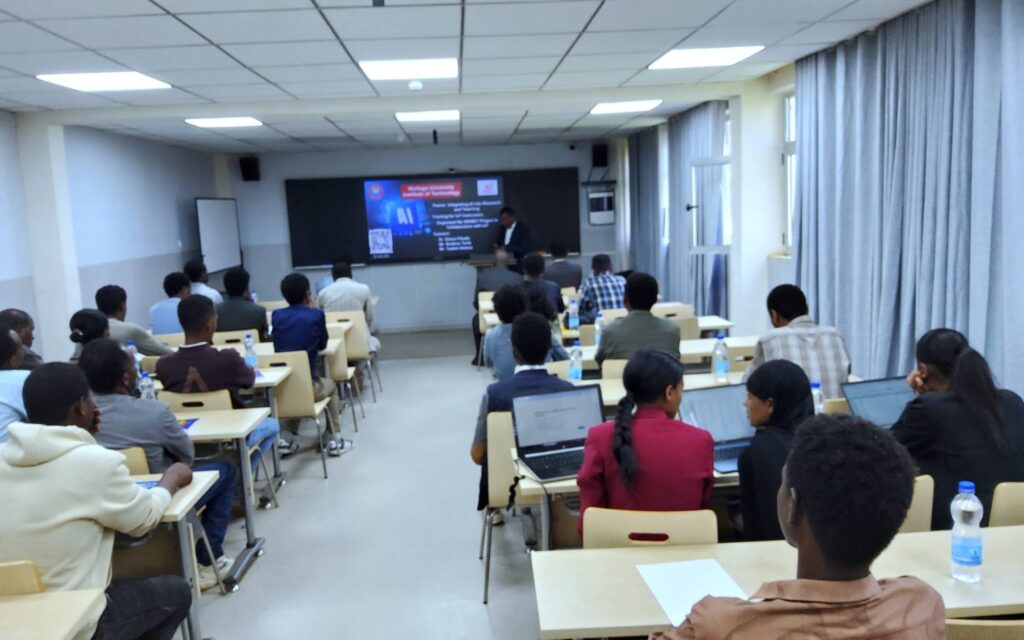
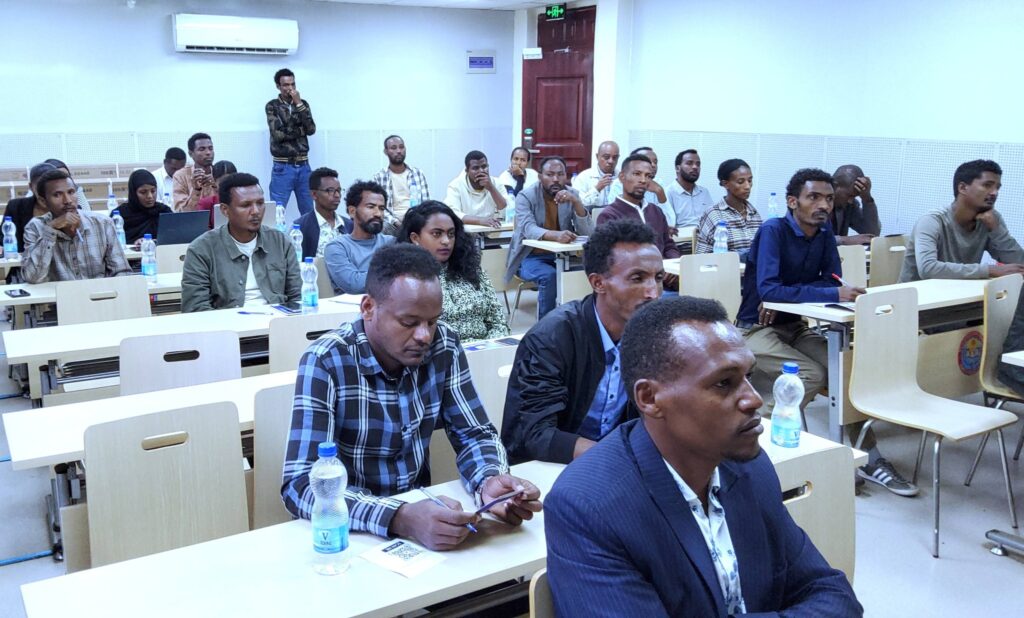
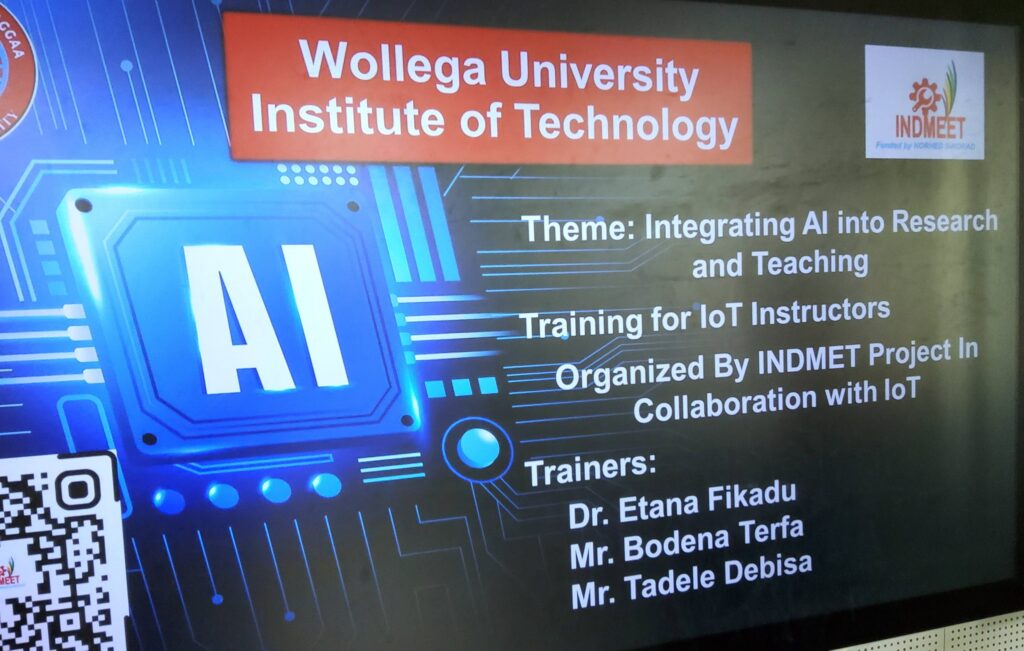
I successfully delivered a two-day Capacity Building Training on Integrating Artificial Intelligence into Research and Teaching for academic staff at Wollega University Institute of Technology. The training was organized by the Institute of Technology in collaboration with the INDMET Project and supported through the NORHED II Programme funded by the Government of Norway.
The workshop aimed to strengthen faculty members’ knowledge of Artificial Intelligence and equip them with practical skills to integrate AI into research, teaching, and academic productivity.
My Role
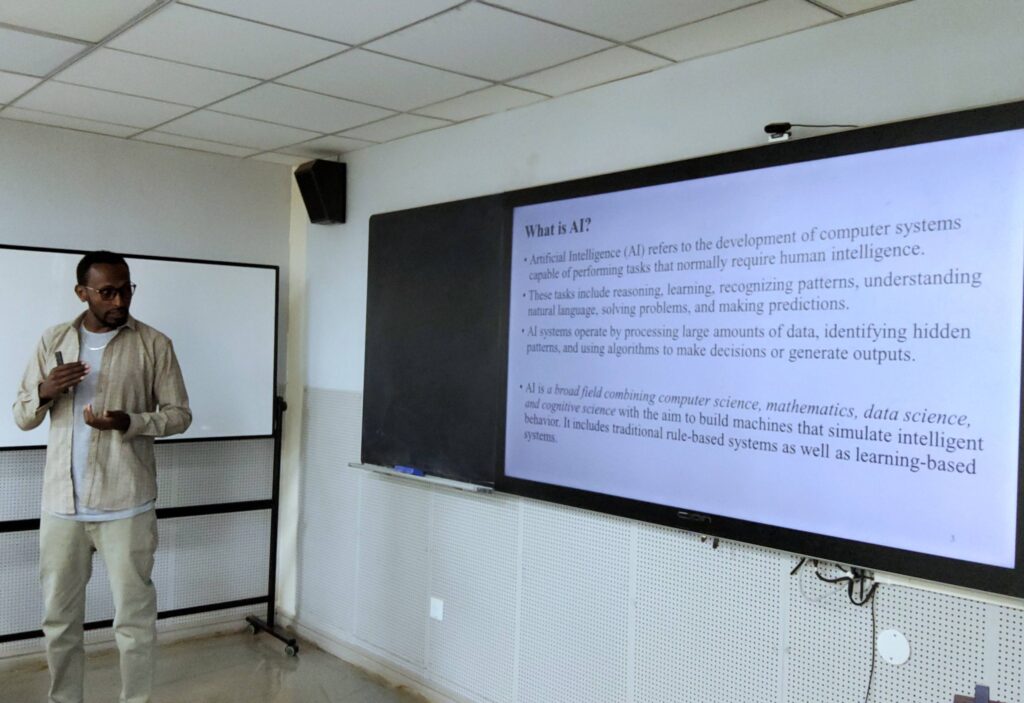
As one of the lead trainers, I delivered three technical sessions covering the foundations of Artificial Intelligence, ethical AI adoption, and introductory Python programming for beginners.
My sessions included:
- Overview of Artificial Intelligence
- Introduction to AI concepts and terminology.
- Current trends and future directions of AI.
- Opportunities, challenges, and real-world applications.
- AI Ethics, Responsible Use, and Academic Integrity
- Ethical use of AI in education and research.
- Academic integrity and responsible AI practices.
- Institutional policies and governance for AI adoption.
- Hands-on Python Programming for Beginners
- Python fundamentals for beginners.
- Writing and executing basic Python programs.
- Practical applications of Python in research and data analysis.
Training Outcomes
The workshop enabled participants to:
- Build a strong foundation in Artificial Intelligence.
- Understand responsible and ethical AI use.
- Explore AI applications in teaching and research.
- Develop basic Python programming skills.
- Increase research productivity using AI-supported tools.
- Strengthen digital competencies for higher education.
Impact
The training contributed to Wollega University’s digital transformation by empowering academic staff to confidently adopt Artificial Intelligence in teaching, research, and academic workflows. It also promoted responsible AI practices while encouraging innovation and continuous professional development across the university.
Reflection
Delivering this training was a rewarding opportunity to introduce academic staff to the rapidly evolving field of Artificial Intelligence. The participants’ enthusiasm, active engagement, and positive feedback demonstrated the growing importance of AI literacy in higher education. I look forward to supporting future initiatives that advance ethical AI adoption and strengthen digital capacity within universities.
Acknowledgement
I sincerely thank the Institute of Technology, the INDMET Project, Wollega University, and all organizers for the opportunity to contribute to this important capacity-building initiative. I also appreciate the active participation and commitment of all attendees, whose engagement made the training both interactive and impactful.
Source
This article is based on the official news published by the INDMET Project regarding the successful completion of the Capacity Building Training on Integrating Artificial Intelligence into Research and Teaching.